
Finally, after a year of preparations, we set off. I drop the young co-pilot off with the older co-pilot and begin the long journey eastwards through Berlin’s evening traffic. I spend the first night at a fishing pond halfway to Warsaw. Tomorrow I’ll travel on to the Lithuanian border with Belarus. After some research into the various borders in the Baltic States (and many horror stories from travellers, some of whom took several days to cross the border from the EU into Russia), I decided to first enter Belarus from Lithuania and then Russia from there. This is still a fairly new option for tourists, as most of the entry formalities required for Russia are completed on entering Belarus.
The next day, after the first long day of travelling, I roll up to a Stovyklavietė in the extreme south-eastern tip of Lithuania. There I meet up with an overlander friend, Robert, who has just arrived from the other direction, coming from Russia and wants to give me some more information about the way. The campsite is located in an almost-exclave of Lithuania in Belarus (which allegedly came into being when Stalin left his pipe on a map). On the way there, we were checked at a police checkpoint, probably due to the precarious geographical location, and had to explain what we were doing in this corner of the world of all places. We end the day with good food, a few beers and lots of travelling yarn.
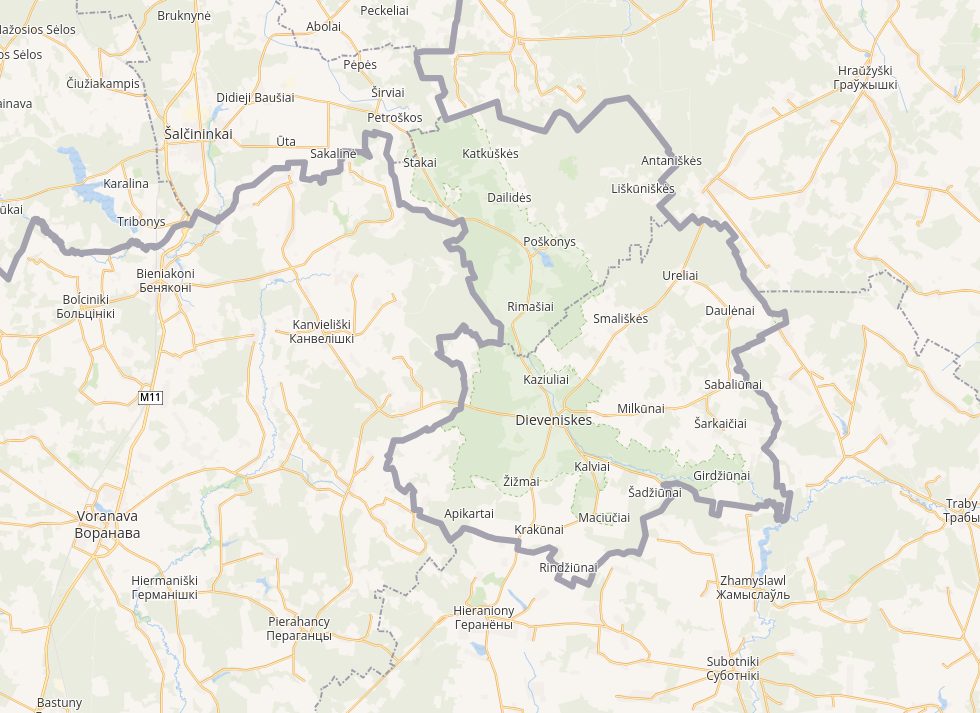
The next morning. Feeling slightly uneasy, I roll up to the Šalčininkai border at half past five. How long will I be stuck here? Will they rummage through my car? Will they ask me into a back room, as is sometimes reported, and interrogate me for hours on sensitive political topics?
It was worth getting up early: there’s no queue at the border. The Lithuanian border guard waves me straight through. Then comes the first queue with five cars in front of the first Belarusian checkpoint. An old man is waiting in front of me in a scrappy Passat. He tells me with his hands and feet how cheap both petrol and liquor are in Belarus. He points to his petrol gauge, which is already below the red line, and gestures that he’s probably going to fill up with both. Well then, cheers mate.
It’s my turn. A young soldier speaks to me in Russian. Me: “Ne pane maju” (me no understand). – Him: “Plocha.” I shrug my shoulders, the soldier smirks. He directs me to open the tailgate and that thing on the roof of the car. He examines the inside of the roof tent with interest. All is good, dawai.
100 metres further on, the next checkpoint. This time a little busier. Please open the doors and tailgate. And let’s not forget to look into the roof tent. I leave it open this time. Then comes the queue at customs. While I’m waiting, I buy car insurance for Belarus in the booth next to the checkpoint and pay some kind of fee at a terminal (road tax? disinfection?).
Next step: Queue for passport control. A grim-faced official behind the window takes my passport. At first, he doesn’t really know what to do with me and the Russian visa in my passport. Tourists have only been allowed to travel onwards from Belarus to Russia since the beginning of the year, with the Russian visa being valid also for Belarus. Apparently, it doesn’t occur every day that a tourist wants to cross this border, passing to Russia. There are a lot of phone calls. My passport is passed on to a greying, obviously high-ranking official with a large hat and lots of decorations on his shoulders. He disappears into the office building. After a while he reappears and my Russian visa gets stamped.
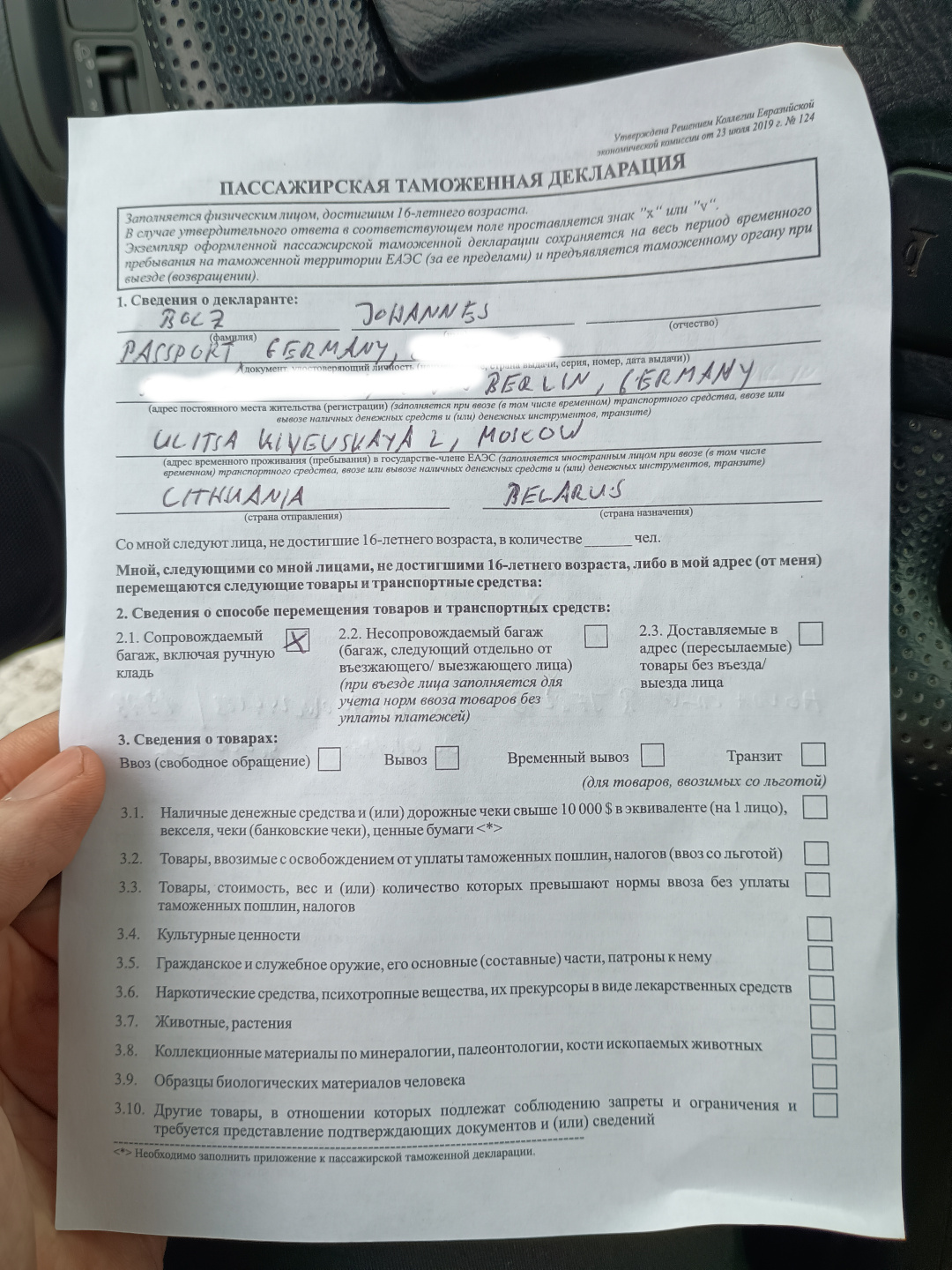
Next stop: vehicle import. I am handed two customs forms, in Russian. Luckily, there is an English translation on display at the checkpoint. I am allowed to park behind the checkpoint and fill everything in at my leisure. I submit my documents to the appropriate control window. The grey supervisor from earlier joins me and apologises that everything is taking a while today. He assigns me a young colleague, she is the only one here who speaks at least some English. She asks me a few questions about what I’m transporting and then tells me to clear out the car. We meticulously go through all the boxes, suitcases and bags. Of course, she also has to take a look in the roof tent. Now that the car is empty, my car has to go through an X-ray scan. A member of staff gets into the car with me and directs me to a corner of the site where there is a ramp next to a lorry. I’m supposed to drive on it. I’m directed to get out and walk 50 metres, behind the line on the ground (Only 49 metres and I would be badly contaminated. But here behind the line, I’m safe.). The X-ray operator gets into the lorry and drives the X-ray machine, which is attached to the lorry as a kind of moving bridge, over the car, beeping loudly. He and his colleagues look at a screen and have nothing to complain about. But wait, they still need to look into the roof tent with their own eyes. I am allowed to drive back to the young border guard who is watching over my unloaded belongings and store everything into the car again. I receive the import document for the car and am allowed to move on to the next station. It is is a simple disinfectant shower to drive through. One last barrier, my passport gets checked, and finally, I’m in Belarus! It all took about six hours. I think that’s not too bad.
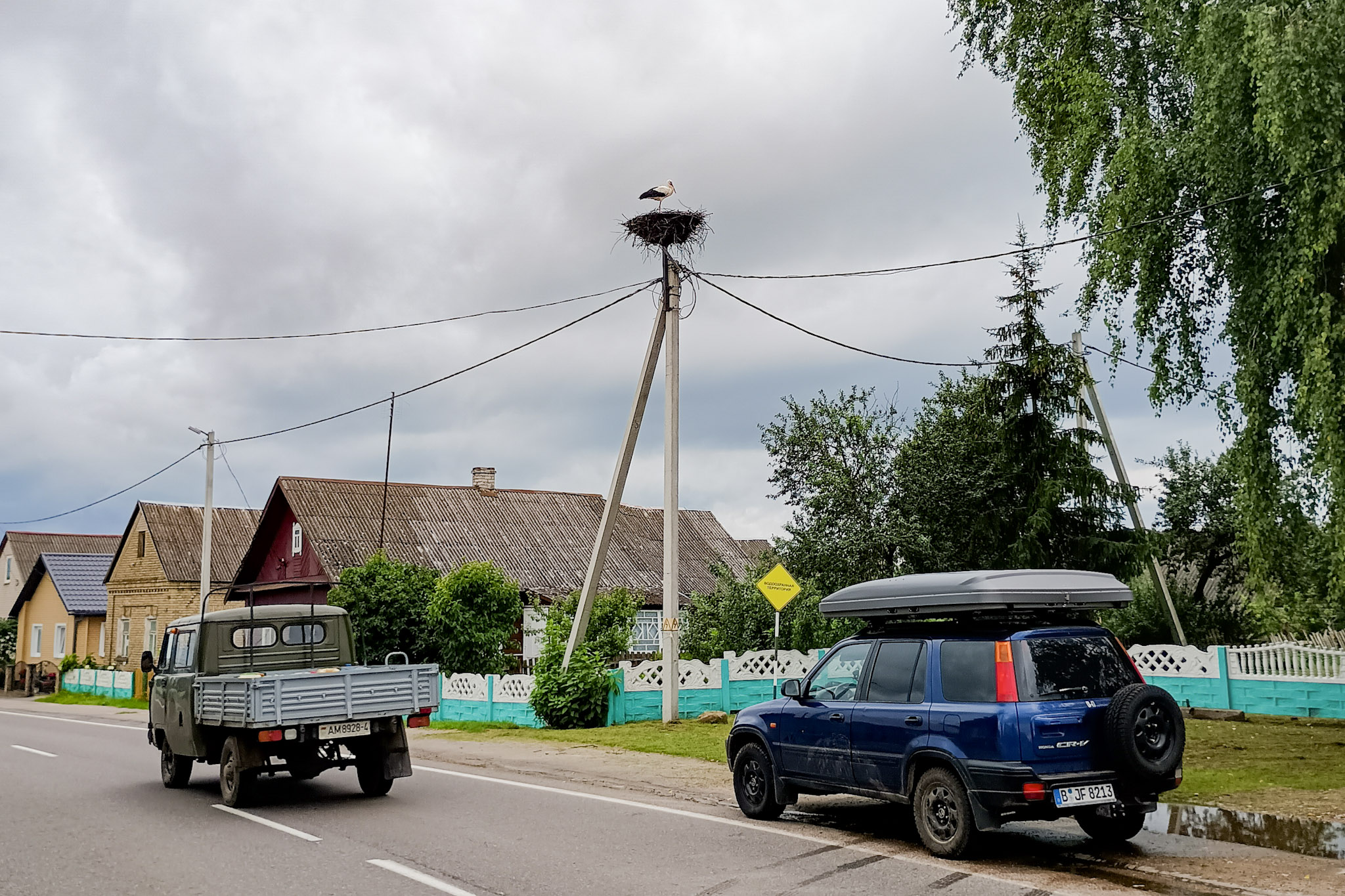
I drive eastwards for a few more hours. The Belarusian motorway is in good condition, the traffic is sparse. Lots of wide open country. According to the internet, wild camping is actually allowed in Belarus. But somehow I like the idea of socialising with a few people in a country that is new to me. I head for one of the few Belarusian campsites. It turns out to be a stroke of luck: the site is a picturesque meadow orchard with a few benches and toilets.
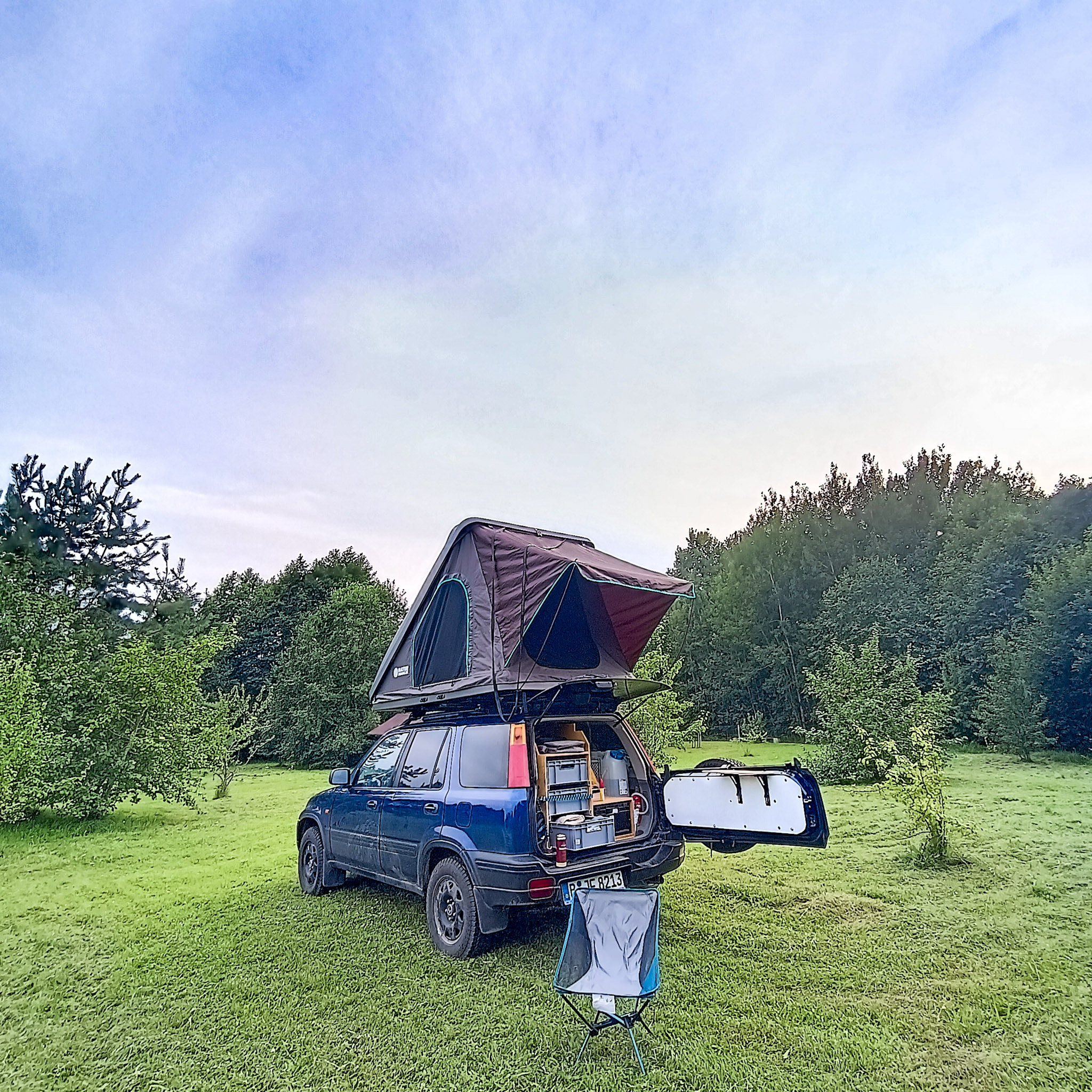
Surprisingly, I’m not the only one here with a roof tent: A family from Russia is also camping here with their van. We strike up a conversation. The family comes from Arkhangelsk, a city on the Arctic Ocean. They are travelling here “down south” during their summer holidays. They give me a packet of colourful Russian jelly sweets. It will prove to be important nerve food later on our journey.
Article translated to English with the help of AI.
Next part: A Transit in Difficult Times: Russia
Previous part: Off to Central Asia!
Leave a Reply