
After a short day in Belarus, I approach the Russian border at the Minsk-Moscow motorway. This is not really a border crossing, as Russia and Belarus form a state union. Citizens of both countries can travel back and forth across the border relatively unhindered. Only foreigners are waved onto the shoulder. A quick look into the car, then I am asked to come along into the small container office. Is the infamous secret service interrogation about to begin? Not really: The border officer only asks a few superficial questions about my travel route, whether I have relatives in Russia and about my profession. He doesn’t go through my mobile phone either. However, the Belarusian entry stamp on my Russian tourist visa raises eyebrows and some phone calls are made. This is probably because travellers have only been able to cross this border since the beginning of the year. But everything clears up and after just 20 minutes I’m told: Dawai, I can continue my journey towards Moscow.
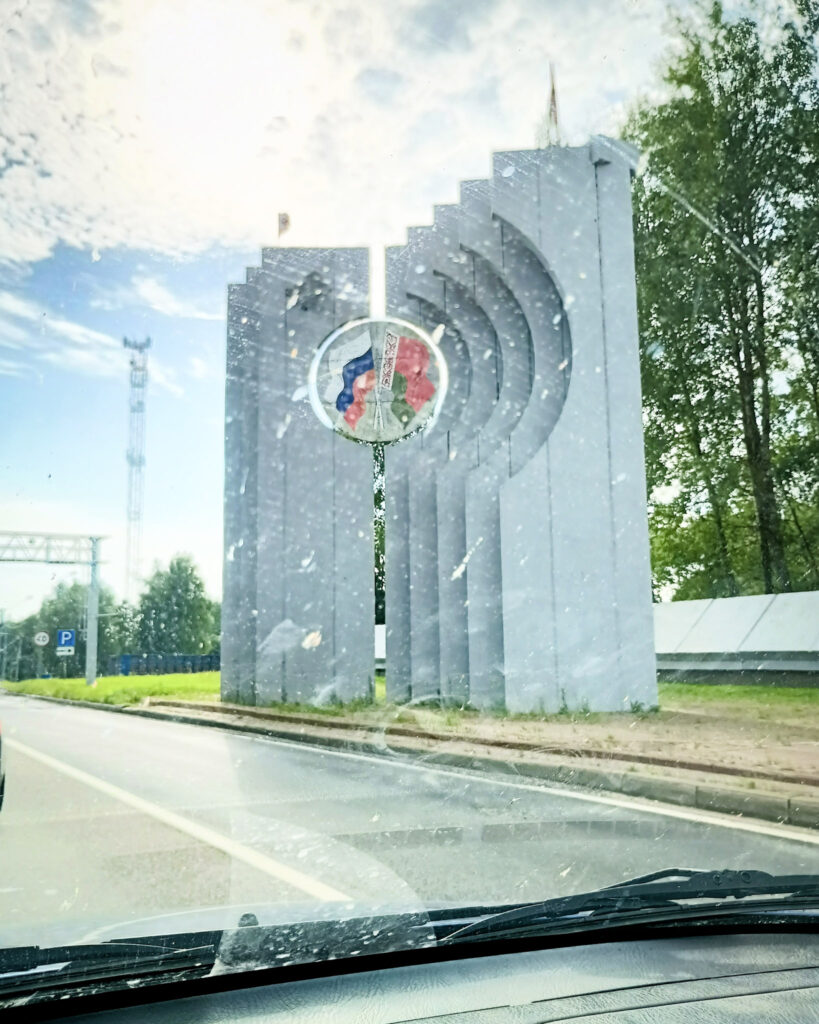
I drive a few more kilometres inland before I take a break. Borders are often very strange places that I like to leave behind. But in any case, I’m already relieved. I’ve overcome what felt like the biggest hurdle of the journey: entering Russia. It was even surprisingly undramatic.
Russia has been on my list for a long time, but I kept waiting for better times. Those better times haven’t actually arrived yet. If there was a practicable route around Russia, going to Central Asia in 2025, I would probably have taken it. On the other hand, countries are more than their politicians. In my life, I’ve travelled to several countries with questionable governments and learned that the human side is often very different from the political side. I am looking forward to the encounters that the next few days will bring.
My first stop is Moscow. I have booked a reasonably central hotel room for the next two nights, so I can enjoy driving along Moscow’s boulevards right into the city centre. As I reach the outskirts, it becomes apparent that Moscow is no city of quiet tones. At the city limits, blue, white and red MiG fighter jets are enthroned on concrete bases next to the road. Towards the centre, the buildings become more ostentatious and the streets become wider. Close to the centre, the access road is seven lanes wide — in each direction! Nevertheless, the traffic is dense. From time to time, expensive sports cars come shooting past, using the bus lane on the right. Phew, you have to be even more vigilant when turning than at home in Berlin. Also, travelling to Moscow nowadays requires you to dig out your analogue navigation skills: The GPS signal is blocked over Russian cities in order to confuse drones. This renders most navigation apps useless. The Russian map app works okay-ish, but not great either, determining your location using Wi-Fi. Good thing I have strategically chosen my hotel so that I only have to take one turn.
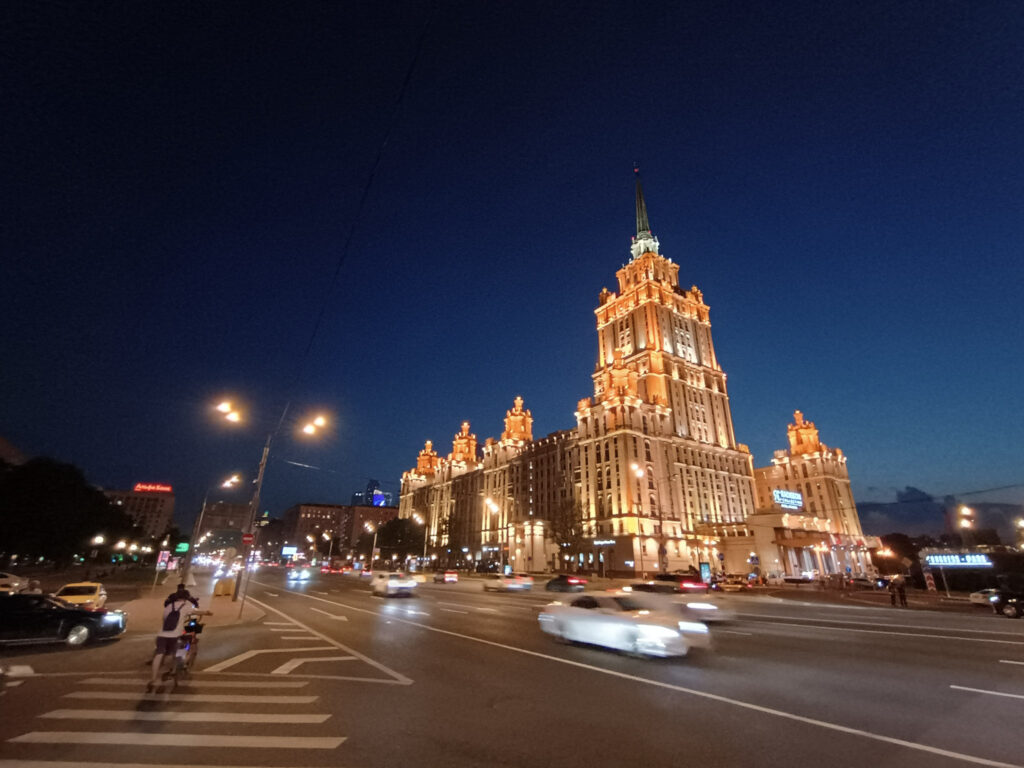
Moscow at night is an experience. Despite being quite exhausted, I go for a long walk. Past the old Hotel Ukraina, around the parliament to Kudrinskaya Square and back. The impressive buildings are brightly lit, the bridges densely decorated with colourful flowers. Below, tourist barges sail along the Moskva River.
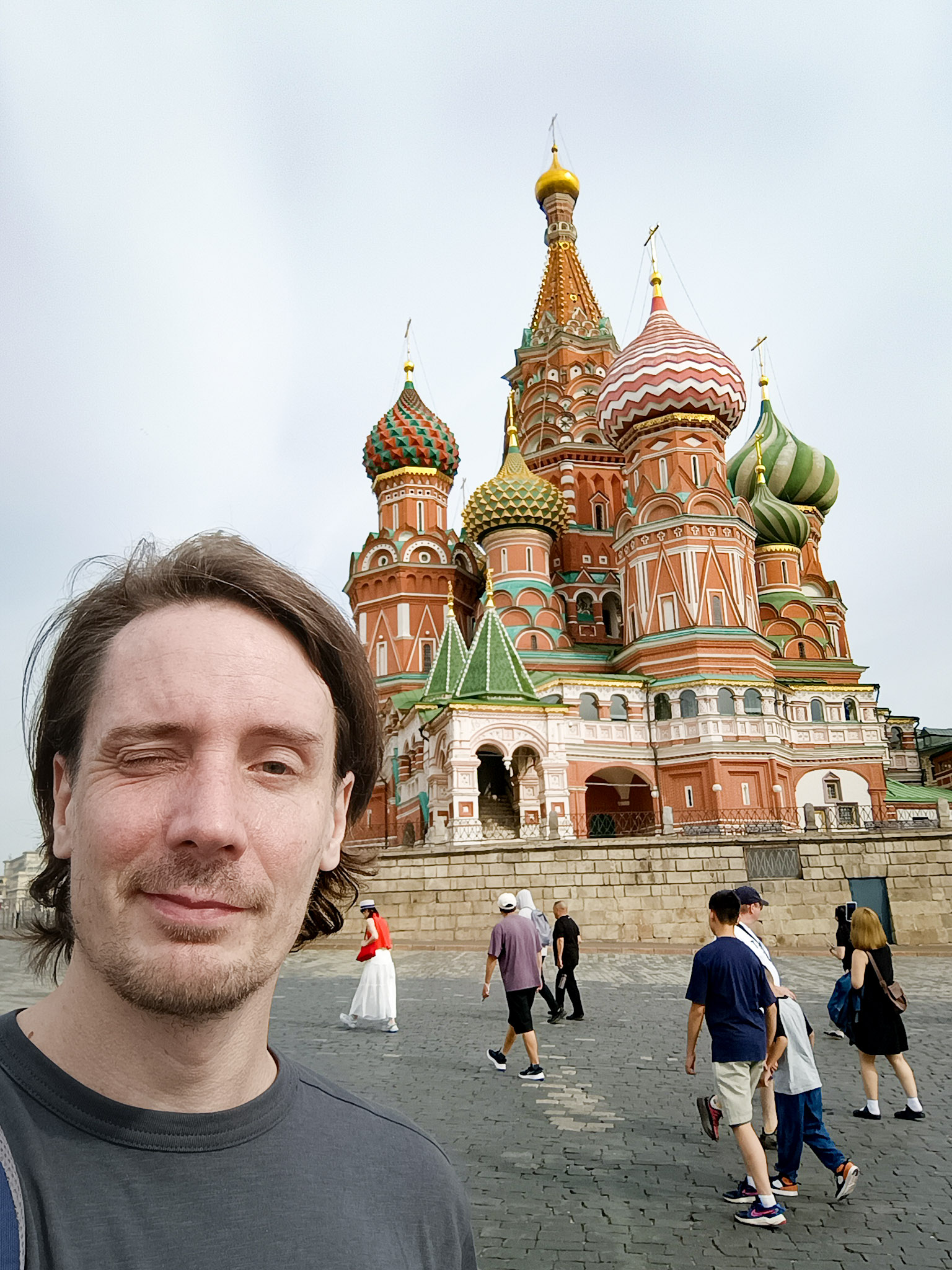
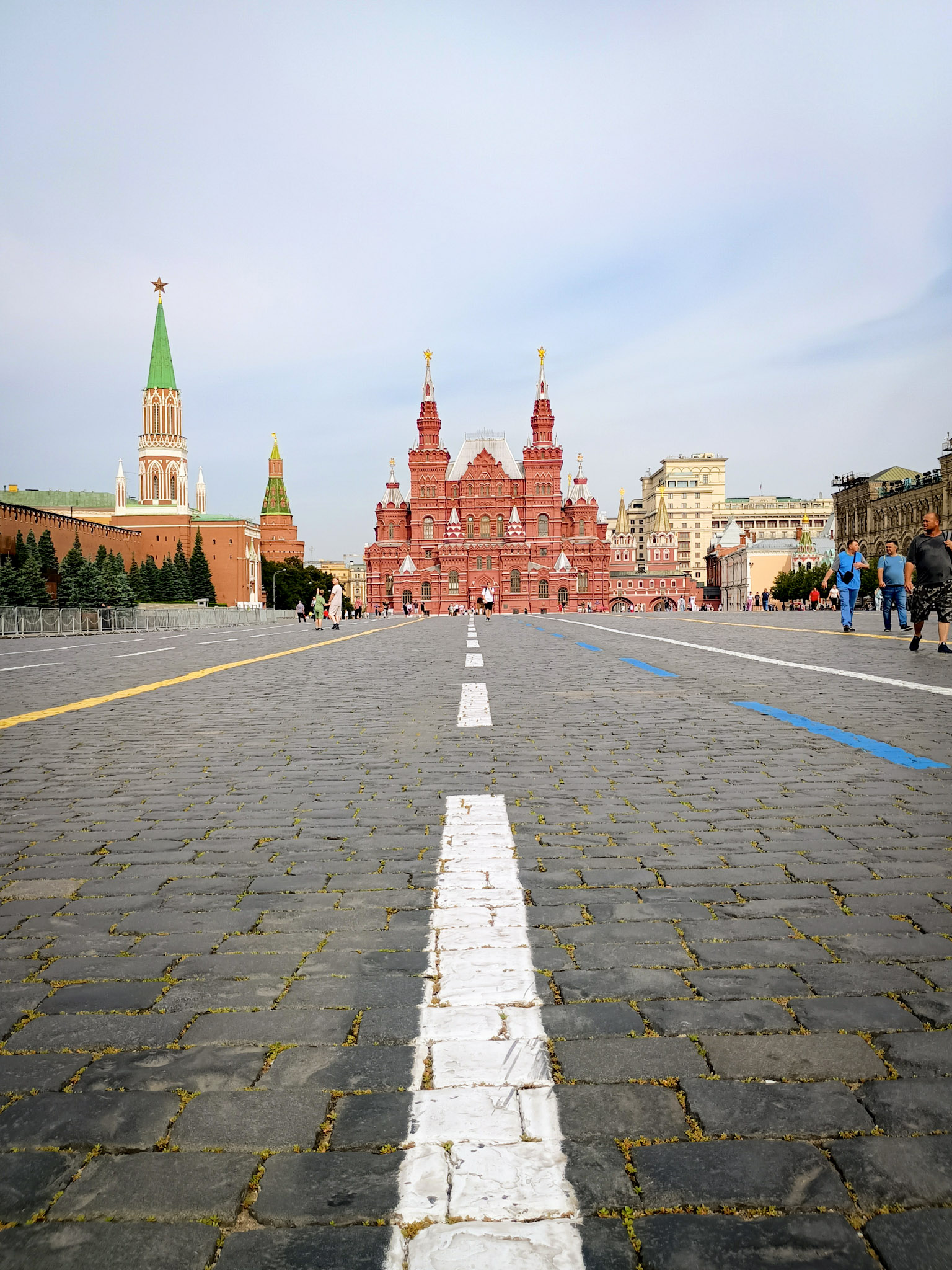
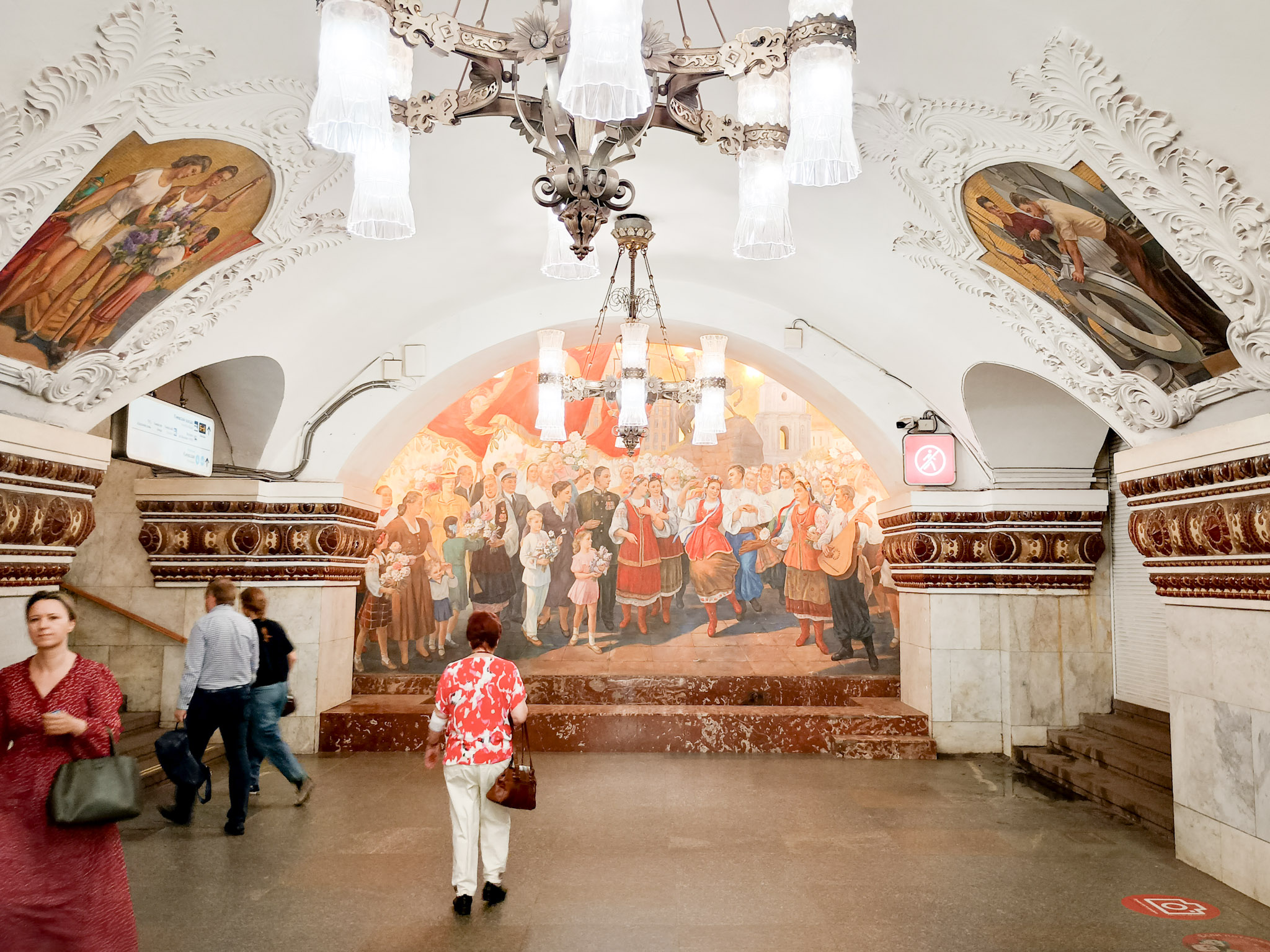
The next day I do the usual tourist loop: I take the metro from Kievskaya station to the centre, then walk around the Kremlin to Red Square. It’s as picturesque as in the photos, but – perhaps because everything else here is so damn huge – it appears smaller than expected. I’m still early, it’s pleasantly cool and not yet too crowded. Lenin’s mausoleum is still closed. Maybe it’s not that important to admire a corpse after all. In any case, in my one and a half days in Moscow — and this has never happened to me before, anywhere, on any journey — I don’t hear a single word of German.
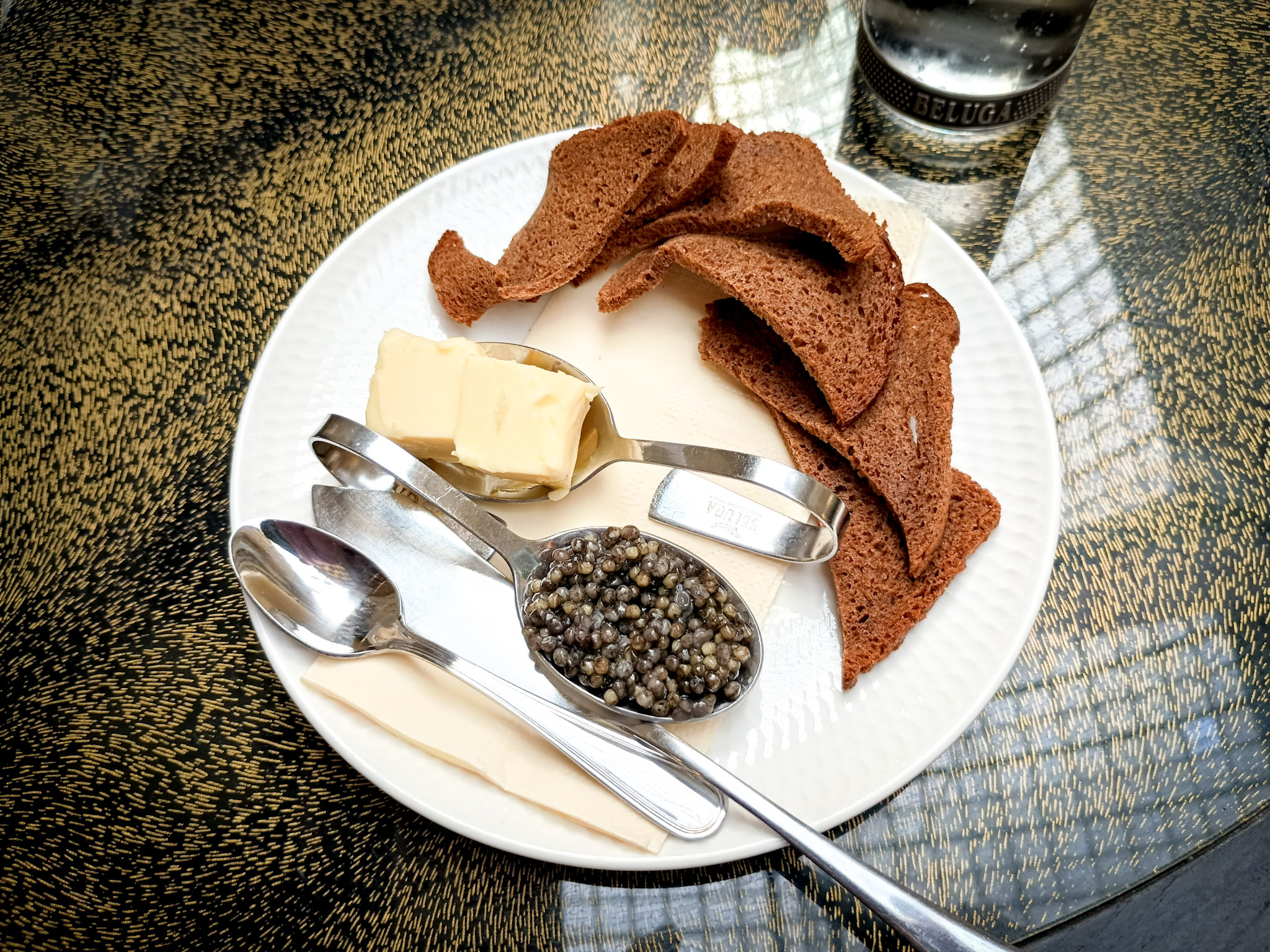
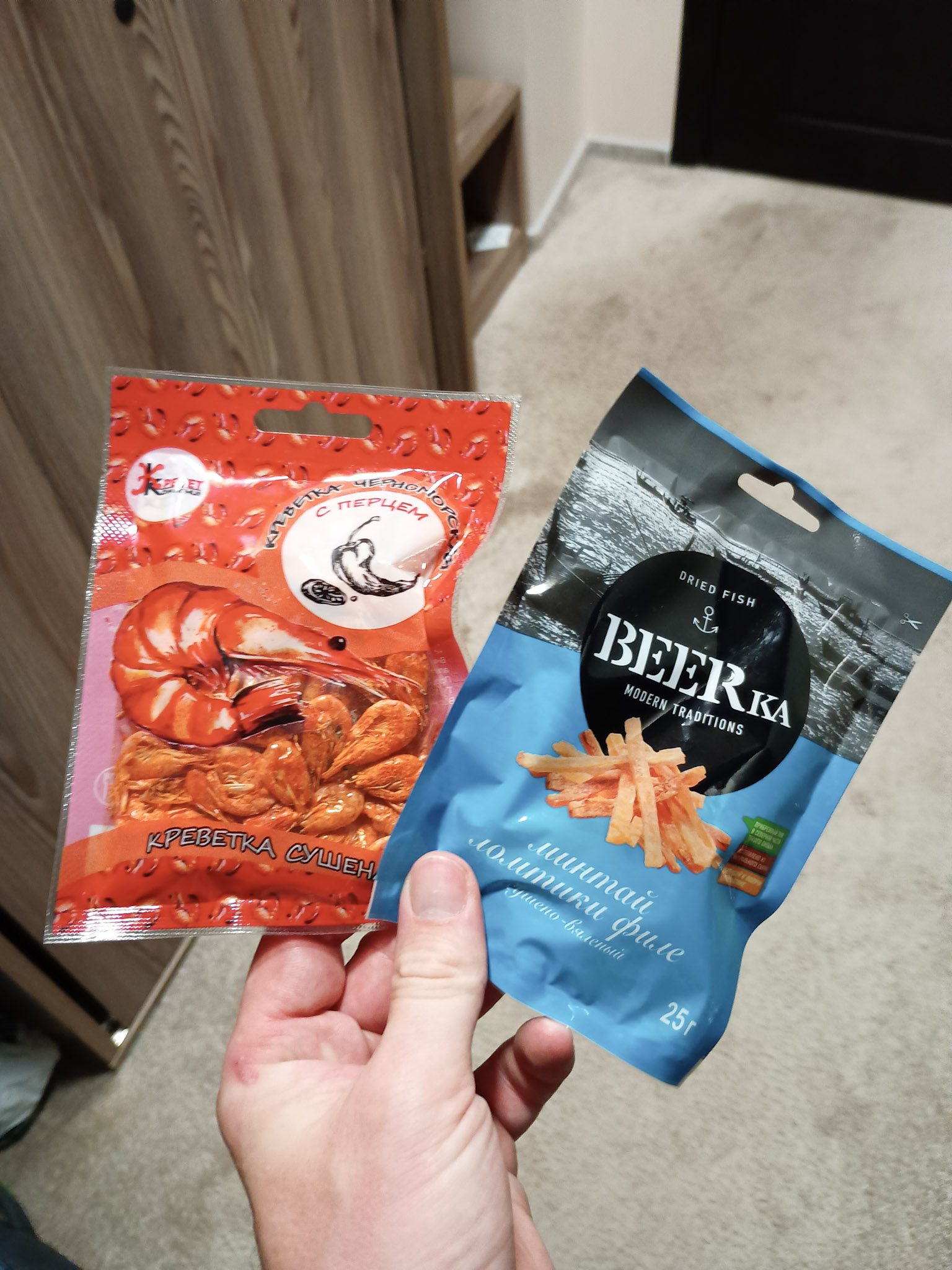
In the afternoon, I go for a bit of shopping. Food in Central Asia is very meat- and fat-heavy, so I stock up on plenty of Russian dark bread. In the Moscow supermarket, I am surprised to see that almost all the well-known Western brands are on sale (with a hefty surcharge). They must be finding their way onto the shelves here despite the sanctions through third countries. In addition to the dark bread, I buy a few interesting-looking Russian sodas, dried snack fish as a present for the young co-pilot and the good Baltika beer for myself. Now I’m all set fot onward journey to the east.
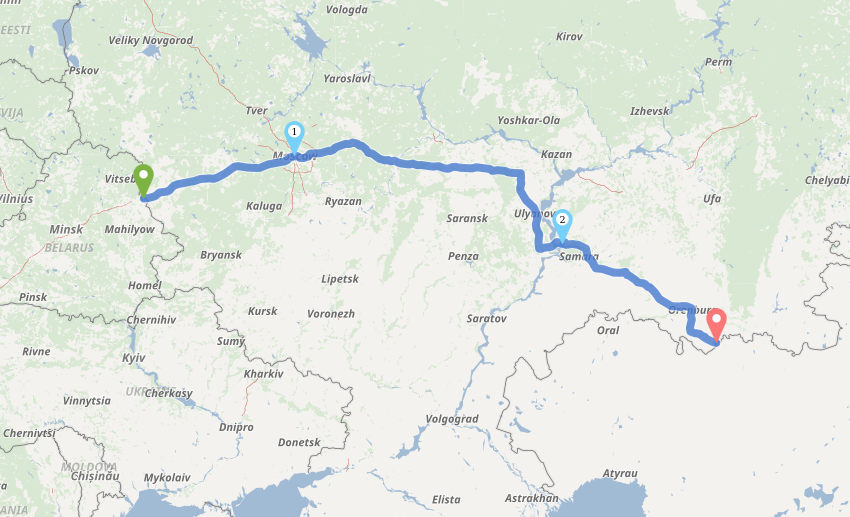
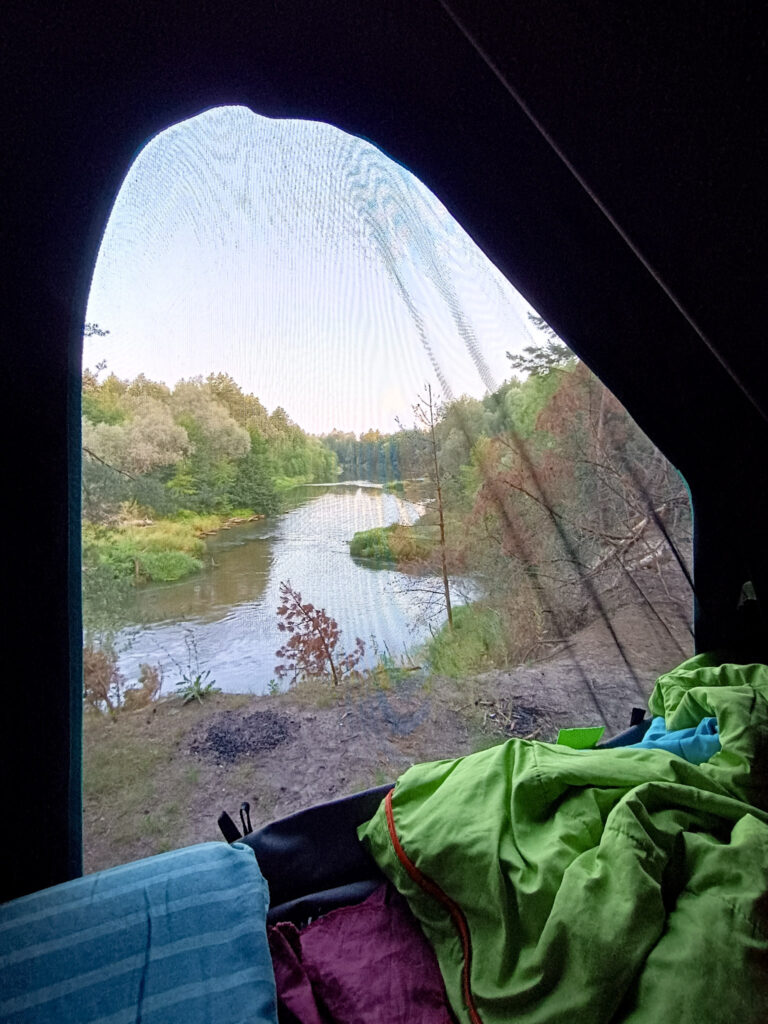
It’s the end of July and very hot and humid. I’m glad that I had the car’s AC repaired at home. After a seemingly never-ending traffic jam out of the city, I take the M12 “Vostok” (“East”) motorway towards Kazan. What is immediately noticeable is that east of Moscow, it suddenly gets very lonely. While the landscape to the west is still reasonably densely populated, there is predominantly dense forest on the other side of the city. I’m still a little cautious in this new country, so I don’t want to camp in the wild just yet, but rather spend the night on an official campsite. But first I have to find one. The map app shows a site not too far from the motorway. I drive to the end of a small forest road. But no campsite in sight, just a few huts. After a bit of searching, a man appears behind one of the huts. With my three words of Russian and the translator app, we manage to communicate. He introduces himself as Nikolaj and seems happy about the western visitor. He shows me the way to the campsite. A steep sandy path leads down to the river. The campsite is simply a picturesque pine forest. I set up camp for the night near a bend in the river. When I ask how much I owe him for the night, Nikolaj waves me off. The sun sets over the river. I unfold my camping chair and open a beer. This is what I imagined the Russian hinterland would be like!
The next day, I turn off the motorway a few kilometres before Kazan, towards Ulyanovsk and Samara. It’s amazing how quickly the landscape changes in Russia when you head south. It takes less than two days of travelling between mixed northern forests and steppe. The colourful, gold-decorated wooden churches turn into colourful, gold-decorated mosques. My destination for today: Togliatti. It’s already late and I look for a room. Hotel Amaks is like a time capsule from Soviet times: Carpets, curtains, furniture: everything is in red and gold. It feels like the place hasn’t been aired for months. But whatever, it was the only hotel with a car park. At least there is a hotel bar. I round off the day with shashlik and beer.
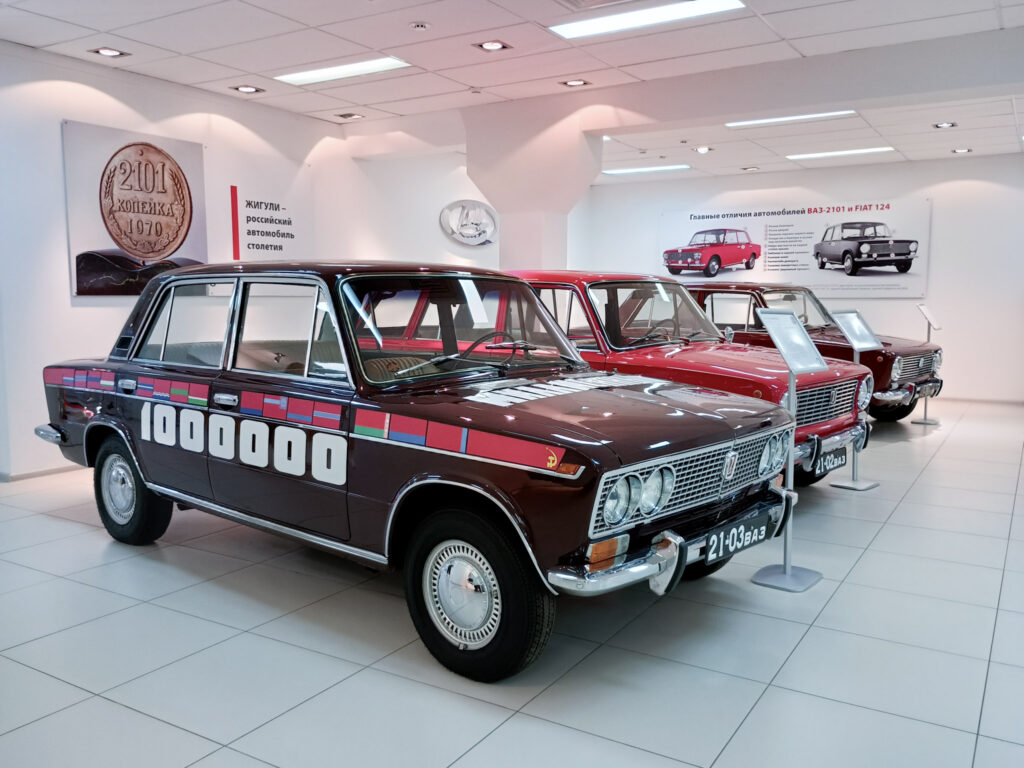
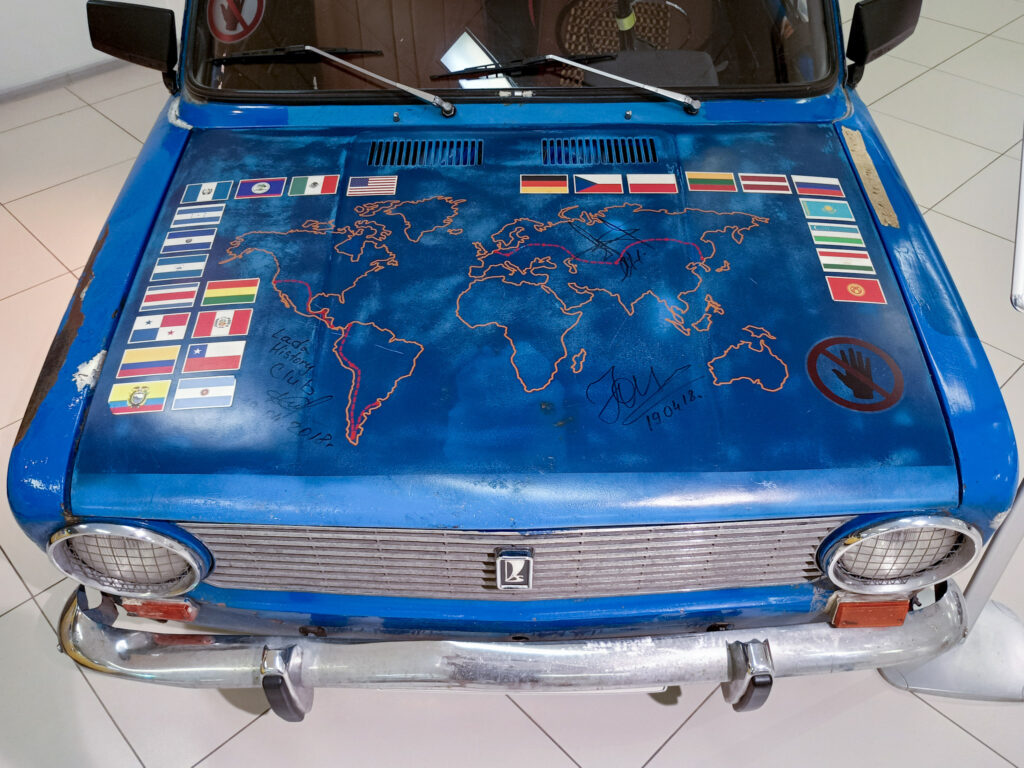
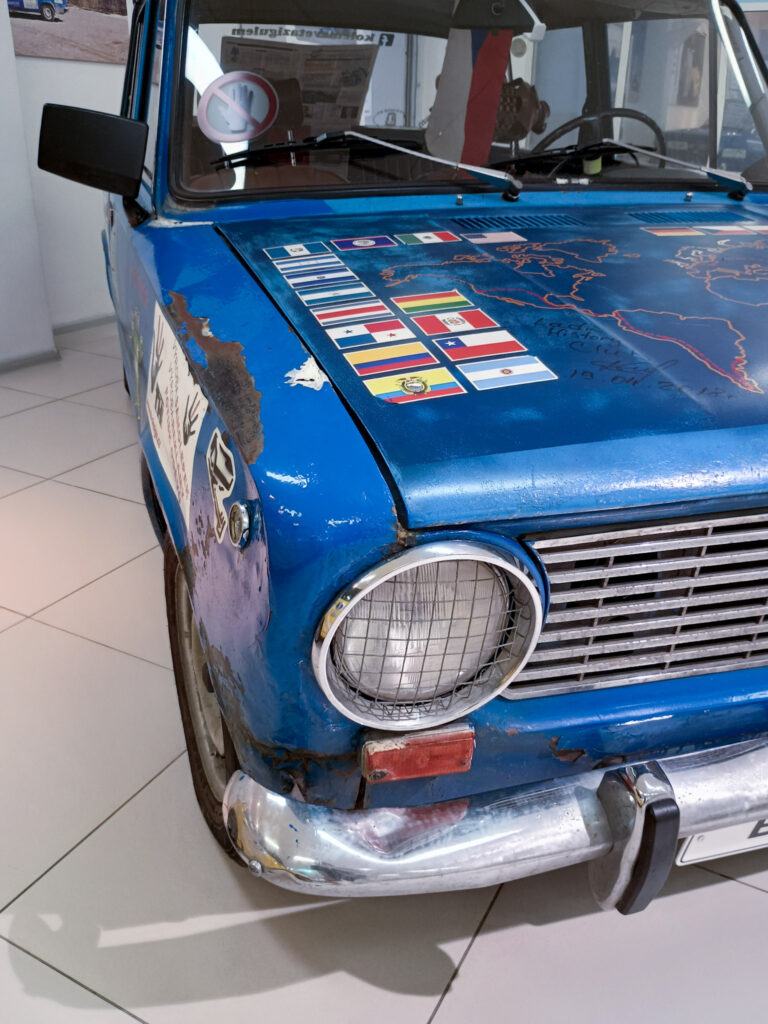
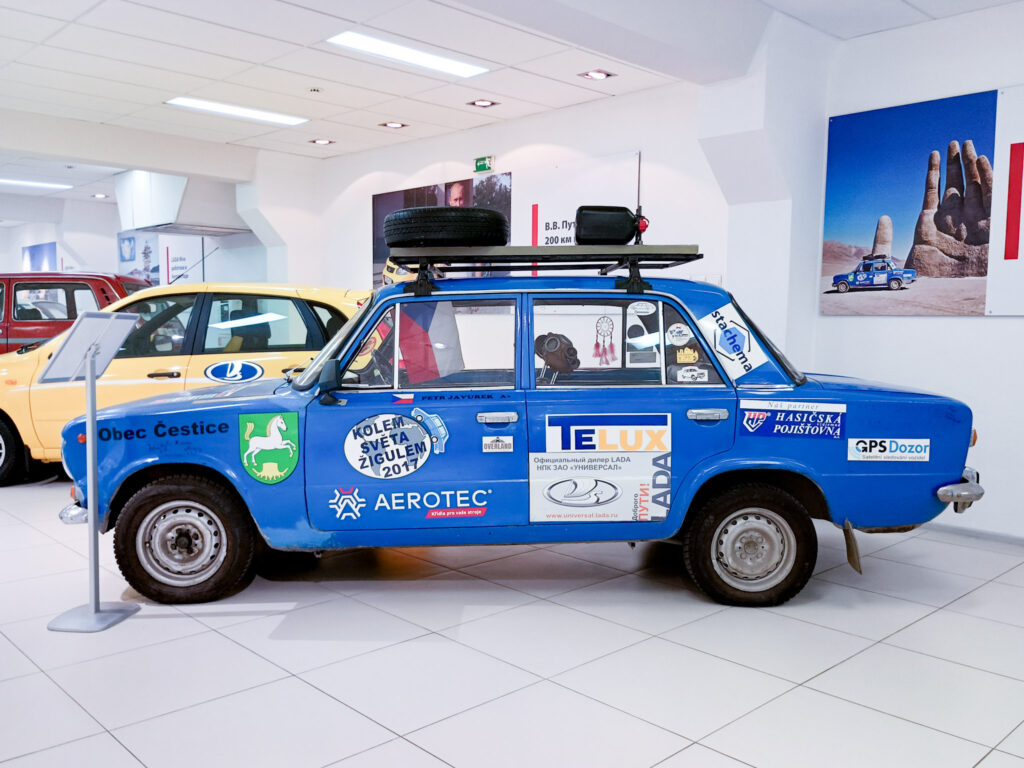
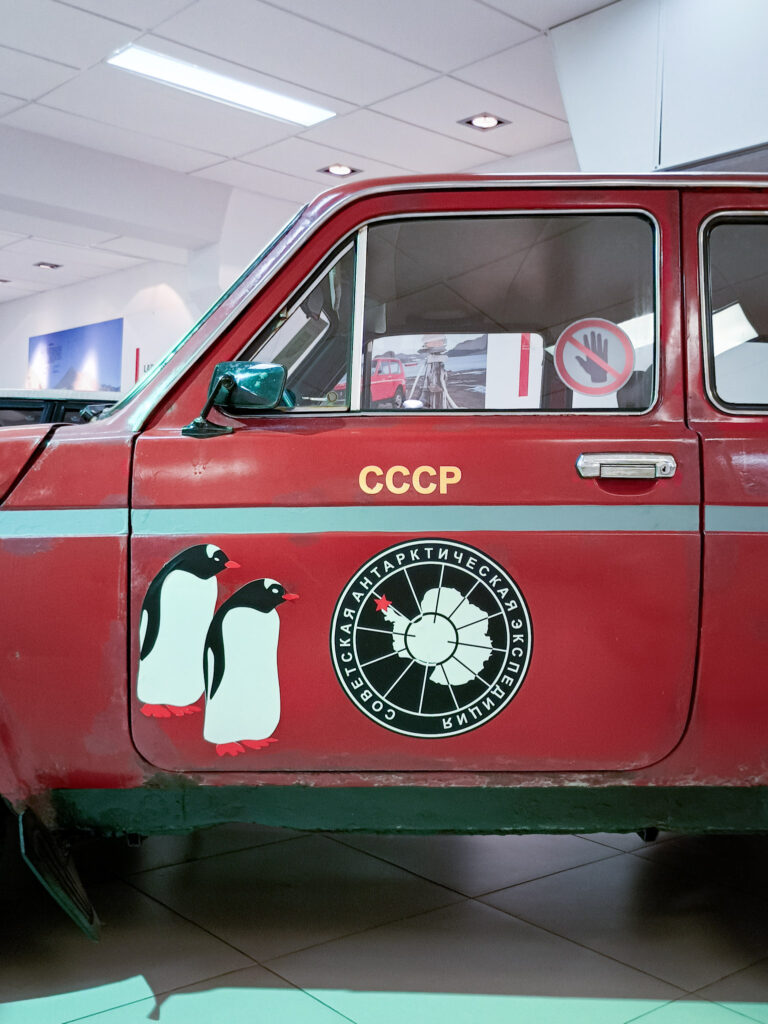
Why stop in Togliatti? — Togliatti is the Lada city. This is where the legendary Niva and Shiguli rolled off the production lines. Of course I have to visit the factory museum. The museum is small, but quite interesting. In addition to all sorts of production vehicles and prototypes, there are cars with a special history to marvel at: for example, a Niva that was used at the USSR Antarctic station. But the highlight for me is that old Shiguli, in which two Czechs drove 50,000 kilometres across Europe, Asia, North and South America. I’m of the opinion that overlanders make way too much fuss about their vehicles. The little Soviet saloon is the best proof that you don’t need expensive “expedition” vehicles to travel the world.
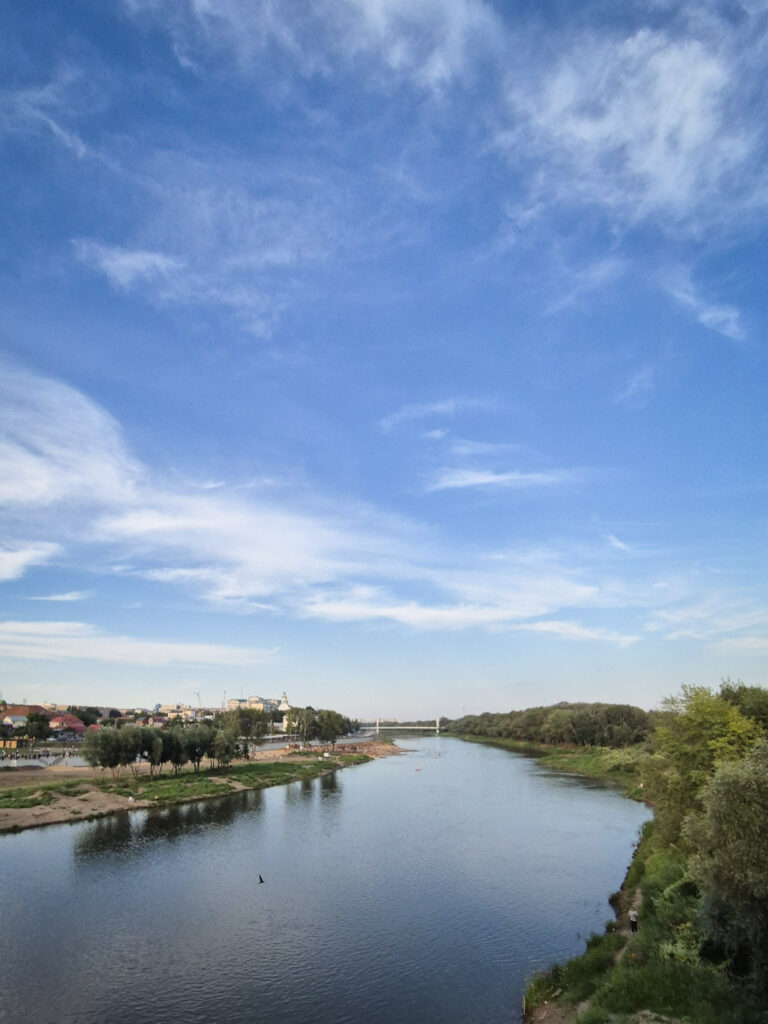
On to the last stage through Russia! I continue on to Orenburg on the Ural River. There are many opinions about where Europe ends and Asia begins. A common Russian definition says that the boundary runs along the Ural River. In Orenburg, of course, I have to take a few photos of the Honda in front of the pillar that is supposed to mark the border. Much funnier than the monument: the town has a sandy beach by the river where the locals splash around between the continents. I find a picturesque place to spend the night a little south of town. Tomorrow I want to continue on to Kazakhstan. I’m curious to see whether leaving the country will be as easy as entering it.
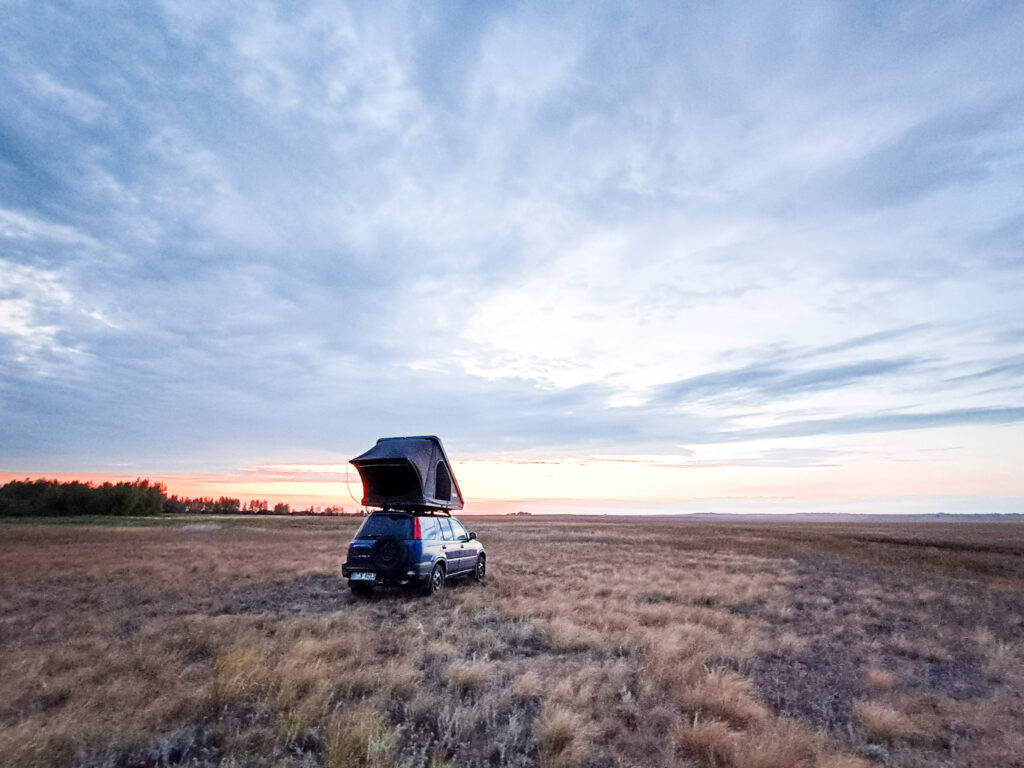
What do I take away from the last four and a half days in Russia? The country is very diverse. I didn’t even have to travel from Europe to the furthest reaches of Siberia to see that. Briefly traversing through the western tip was enough. I really want to come back, stay longer, see more of the country, get to know more people. But that will have to wait until times are really better.
Translated from German with the help of AI.
Next part: In Laika’s Footsteps: Kazakhstan
Previous part: About Stalin’s Pipe and Siberian Sweets – a Day in Belarus
Leave a Reply